This time of year brings out the old favorites. What are yours? "Miracle on 34th Street?" "Charlie Brown?" Certainly, "A Wonderful Life" makes a majority of lists of must-see Christmas movies.
I confess, Jimmy Stewart is a favorite in our home. His everyman characters capture our attention and endear. We would love to see a real Mr. Smith in Washington. But, I digress.
Mr. Stewart was an everyman, starting with humble roots in his hometown of Indiana, PA. He, like most men of his generation, in spite of his notoriety, wanted to serve his country in WWII. And serve did. He enlisted shortly after winning an Oscar for his role as a reporter in The Philadelphia Story. He was so skinny he had to tell the enlistment officer to forget to weigh him during his physical.
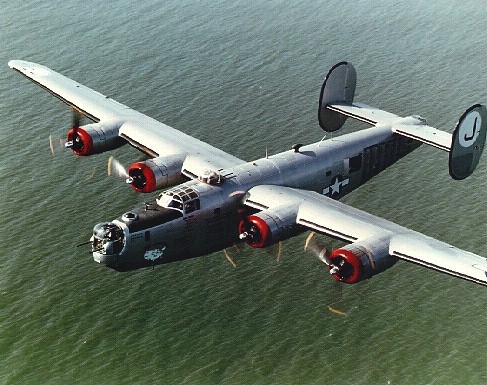
He won the Distinguished Flying Cross as commander of the 703rd Sqaudron of the 445th Bomb Group, flying the B-24 Liberator. Reportedly, at least one of his planes was called, Four Yanks and a Jerk. He flew 23 combat missions and, according to Donald L. Miller's Masters of the Air (Simon and Schuster; 2006) he did not lose a man to enemy fire or mental breakdown (a serious issue throughout the European air war). His men were pleasantly surprised to find his persona much like what they enjoyed on the screen. "Aww...now doggone it, fellas..."
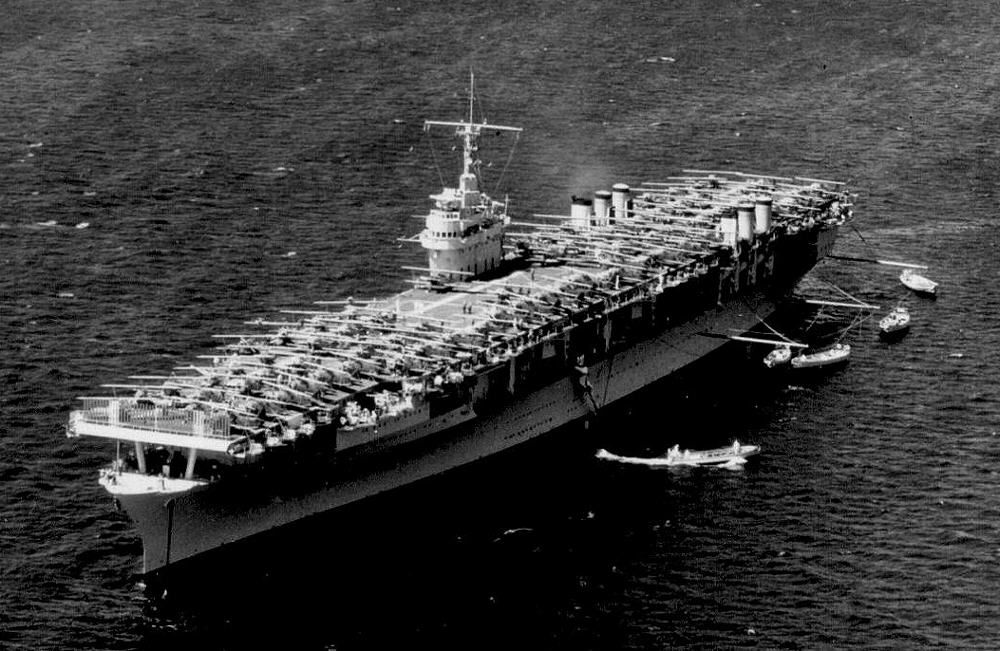
Today we remember Pearl Harbor. Consider how differently the war would have gone had the USS Saratoga (returning from Bremerton, WA), the USS Enterprise and the USS Lexington been, as the Japanese anticipated, in Pearl on 7 December.
On 28 November, Admiral Kimmel sent USS Enterprise under Rear Admiral William "Bull" Halsey to deliver Marine Corps fighter planes to Wake Island. On 4 December Enterprise delivered the aircraft and on December 7 the task force was on its way back to
Pearl Harbor. On 5 December, Admiral Kimmel sent the USS Lexington with a task force under Rear Admiral Newton to deliver 25 scout bombers to Midway Island.
These carriers were preserved - they were our only carriers in the Pacific at the time. They fought, and fought well, on another day. In some ways, the destruction of our aging battleships forced production of newer and better ships. The U.S. would produce vessels and war materiel in unprecedented ways in the coming days. This would eventually be a significant contributing factor to victory.
Why are sports so much fun? Being blessed with mediocre abilities (on a good day), it isn't so much about personally achieving great heights or doing the impossible for me. Though, I find those stories of others are often compelling, even emotionally moving. Often, it's just the mundane fascinates or amuses me (a simple mind). During Cal Ripken's heyday, Eddie Murray played first base for the Baltimore Orioles. He would carry the infield ball out at the top of every inning at Memorial Stadium to warm up the guys. Watching closely, I saw Murray would go through the same routine each time the O's took the field between innings as the pitcher warmed up with catcher Rick Dempsey. He would throw the ball for Ripken, stationed behind the bag at second, trying each time to hit the base with his left-handed lob. After warmups wound down and the infield ball was returned to the dugout across the field to the home dugout in a religious way. Murray threw the ball across the third-base line on one hop to someone standing in the right-hand corner of the O's dugout who, upon catching it, would pivot and lob it to someone in the left-hand corner. The ball, upon completing it's cicuit, returned to rest behind the bench in the same spot until Murray would retrieve it again to go out to first base and do it again.
Meaningless. But routine. Somehow, whether by specific design, or just an evolution of a ritual, the cycle predictably repeated itself. It's those little things which add humor and life to the mundane in the realm of sport - and fascinate me. Murray, a favorite of mine and probably all O's fans, was never particularly demonstrative. But, it seemed to me, when he would hit the bag on his toss to Ripken, there was a trace of smug satisfaction evidenced in his posture. A small victory won. Baseball and sport consist of small moments which provide the stuff of story-telling.
A favorite baseball book, October 1964, by David Halberstam (chronicling the seasons of the NY Yankees and St. Louis Cardinals), captures not only the little bits of life in the season of two great teams, but also some of the heights achieved by doing things well. One key player, not so much in his prowess (he made his mark being notoriously average: "Baseball hasn't forgotten me. I go to a lot of Old-Timers games and I haven't lost a thing. I sit in the bullpen and let people throw things at me. Just like old times." ) but in the taking of the mundane to grand heights. Enjoy one of many anecdotes featuring the beloved Bob Uecker ("He missed the tag!"):
--------------------
"On the day of the first game (of the '64 World Series), Bob Uecker was shagging balls out in left field with some of the other scrubs. In order to mark the festivities, three Dixieland bands were stationed there, and at one point they took a break and put down their instruments. Uecker wandered over and picked up a tuba. For a moment he thought of trying to play it, because that might amuse the other players, but just then someone hit a slow, lazy fly out to left. Instinctively, because he was born to be a comic, Uecker circled under the ball with the waiting tuba. He tried for the catch in the mouth of the tuba, but missed. The next one he caught. Then he missed one. The players began to laugh and the crowd began to cheer. He missed two more flies and then caught one. Some of the balls dented the tuba, and the owner was not amused, sending the Cardinals and Uecker a bill for $250. His teammates, though, were delighted. It was the World Series against the mighty Yankees and the Cardinals were very relaxed."
The more things change, the more they stay the same. Consider the following remarks recorded by the Honolulu Star-Bulletin on 7 December (I assume it this is from an evening edition):
Comment Reserved By Kita
Four armored policemen were dispatched at 10:30 this morning to guard the Japanese consulate, 1748 Nuuanu St. Two uniformed guards patrolled outside the consulate grounds, on Nuuanu Ave. and Kuakini St., and two uninformed men were stationed on the grounds.
___________
Nagao Kita, Japanese consul general here, said this morning that he thought the bombing of Honolulu was “maneuvers” by the U. S. forces here. When informed that there were casualties, he remained unconvinced that the bombing by Japanese planes had actually taken place. “I was lazy this morning and didn’t get up until late,” he said, at the Japanese consulate where he was asked for a statement by The Star-Bulletin. “I heard a lot of gunfire but I thought the U. S. army and navy were on maneuvers,” he added. He said he would reserve comments “until I find out what this is all about,” and did not make any statement. Otojiro Okuda, vice consul who was with Mr. Kita and other consulate staff members at the Nuuanu St. consulate, expressed surprise and disbelief when told that “this bombing was serious.” “I heard quite a lot of noise this morning but I never imagined that this was a real bombing,” Mr.Okuda said.
Oh.
I don't imagine those comments were well-received.
History would later reveal the substance of messages to the Japanese consulates - which Americans code-breakers read. The full implications of the intercepted/decoded messages would not emerge until it was too late.
Recommended further study: At Dawn We Slept; Gordon Prange. Sadly, while a student at University of Maryland, Dr. Prange was a history professor. I never knew it because of the foolish choices I made at the time. Thankfully, his books remain with us.
Well, it would normally be very good to know a large contingent of enemy planes was closing quickly on the most important Naval base in the Pacific. But factors mitigated against such knowledge. We did have a new RADAR station operating on the morning of 7 December. But....in 1941, RADAR technology was new and not yet understood for the powerful tool it is. Additionally, a flight of B-17's was due in from San Francisco that morning. So when the RADAR reflected the incoming planes, they were thought to be those B-17s. This combination of factors eliminated the U.S. advantage. The following timeline briefly shows the course of unfolding events.
0702 - Privates Lockhard and Elliott of Opana Radar Station pick up what appears to be a flight of unidentified aircraft bearing in 132 miles north of Oahu. Discussion follows 0710 - Elliott phones the information in to Fort Shafter. The only person present at the Information Center is Lt. Tyler, having begun his on-the-job training Dec. 3. The conversation lasts ten minutes. 0720 - Lt. Tyler feels certain that the unidentified planes are B-17s scheduled to arrive from the mainland and instructs Opana station to shut down. Privates Elliott and Lockhard, however, continue to plot the incoming flight.
We approach the anniversary of the Pearl Harbor attack of 1941. In preparing to talk with some students about WWII, the number of telling events which occurred on the fateful day is, in retrospect, remarkable. Naturally, retrospect is the clearest way to see things, is it not? So I present some facts over the next few days which may or may not be new to you.
Torpedo nets protected Pearl Harbor as a matter of course and to gain access to the harbor, the nets had to be lowered.
The destroyer, U.S.S. Ward (DD-139), an old four-stacker, patrolled the waters outside the harbor during the 0600 hours of 7 December. They spied the U.S.S. Astoria slowly making it's way in to the harbor, through the now dropped torpedo nets. Amazingly, directly behind the Astoria, was the conning tower of a mini-submarine.
The Ward went to general quarters and closed quickly. It's number three five-inch gun sent the first round fired by the U.S. in the war directly at the conning tower, but it sailed just high. The second shot found it's mark, catching the craft at the joint of the conning tower and hull. The shot sunk the vessel (recovered years later).
The Ward served for three more years to the day, 7 December 1944, when a kamikaze attack sunk her in the Leyte Gulf.
The U.S.S. Astoria (Nasty Asty) was sunk off Savo Island, supporting the Marine operations on Guadalcanal in July 1942.